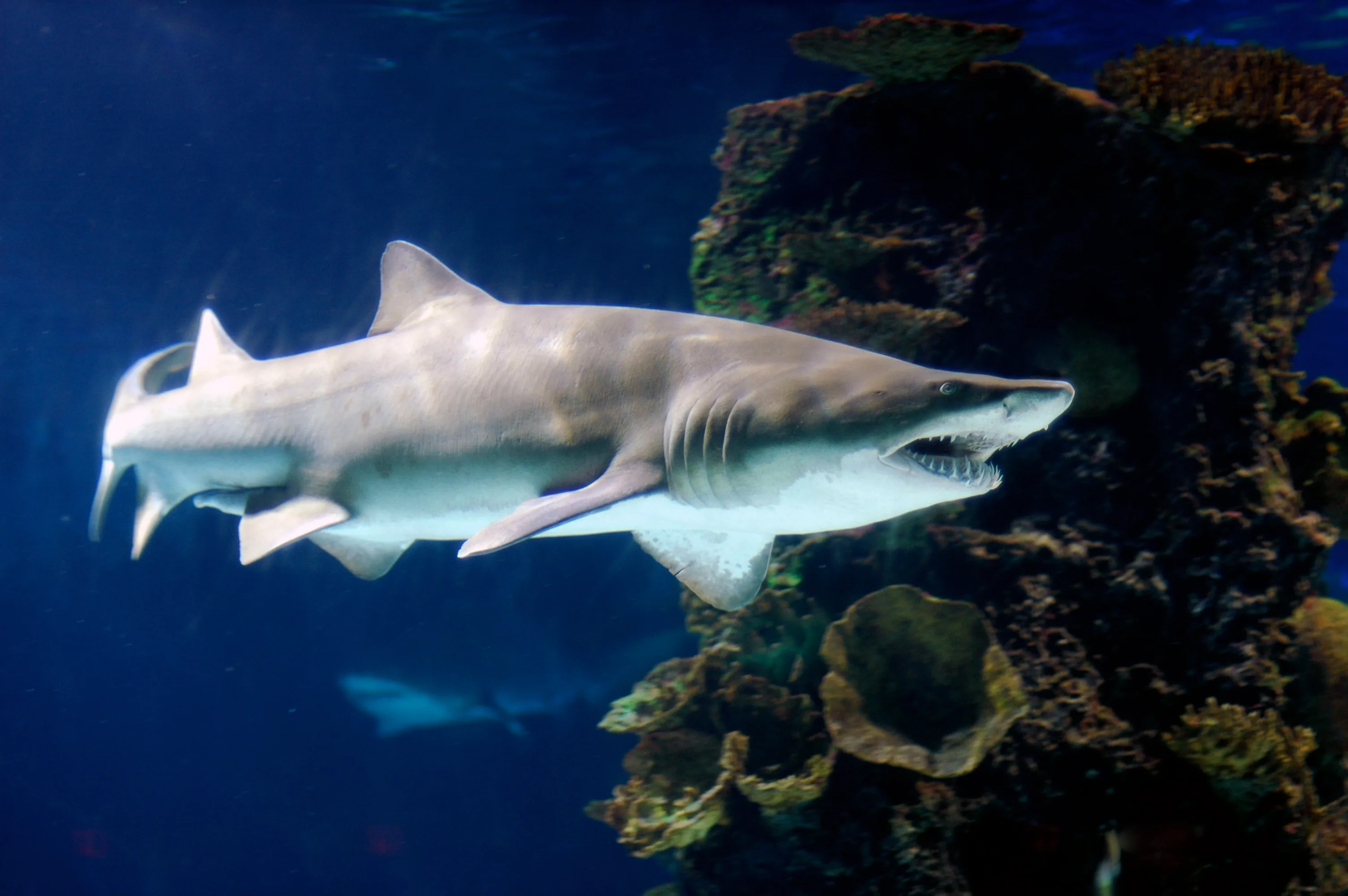
The sand tiger shark is confirmed for Planet Zoo 2. Plan its home as an aquarium, then verify its individual care values before you adopt it. Aquariums use water volume, salinity, temperature, feeding and staff access as practical considerations. The shark's exact minimum volume, permitted group, diet settings and compatible species are not established by the information available for this pre-release guide.
This guide is dated October 12, 2026, before the scheduled October 13 release. It separates the real animal's identity from the game's confirmed aquarium systems. The build sequence below is a planning recommendation, not a tested species recipe. You can use it to reserve a sensible aquarium site without trusting invented tank dimensions or importing a requirement from the first Planet Zoo.
Identify the animal before you build
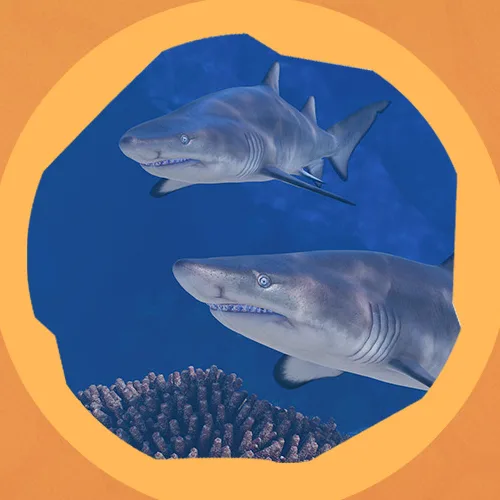
The scientific name is Carcharias taurus. Sand tiger shark, grey nurse shark and spotted raggedtooth shark are names used for the same real species in different regions. Those alternate names can help you recognize the animal in educational material, but the game's roster uses Sand Tiger Shark. Avoid confusing it with a tiger shark, a blacktip reef shark or the Indo-Pacific leopard shark; a shared word in the name does not establish matching requirements.
Look for a bulky body, a flattened conical snout and conspicuous narrow teeth. The two dorsal fins are similar in size, and the upper part of the tail is noticeably larger than the lower part. Its coloration is generally brown or grey above and pale below, sometimes with darker spots. These are identification details from real-world biology. They explain what to look for in the model and do not determine an aggression rating or a welfare bonus.
Use natural history to choose a theme
Real sand tiger sharks occur in coastal marine environments, including reefs, shallow bays and areas near the continental shelf. They are also known around shipwrecks. A coastal aquarium or a restrained wreck-inspired scene is therefore a reasonable creative direction. That direction describes the exhibit's appearance; it is not proof that a particular scenery piece satisfies a simulated habitat requirement.
Keep the animal's swimming space readable. A busy wreck scene can hide the very animal visitors came to see, while too many large objects may make later changes awkward. As a design recommendation, place the strongest visual feature to one side and keep another viewing angle relatively open. Use the game's actual species information to decide which habitat objects count toward its needs.
Real-world depths and geographical ranges are not aquarium size instructions. A shark that occupies a broad natural range does not automatically need the same measurements in a game, and a photograph from a public aquarium does not reveal Planet Zoo 2's minimum water volume.
Plan the water environment first
Planet Zoo 2's aquarium system explicitly distinguishes freshwater, saltwater and brackish conditions. A network of water filters supplies aquariums and can be configured for those categories. The real sand tiger shark is marine, so saltwater is the sensible category to investigate first. Confirm the entry's actual requirements before using that observation as a final configuration.
Temperature is a separate control. The aquarium staff gate provides control over water temperature and lighting, but the shark's exact preferred temperature range is not supplied here. Do not select a number because another shark uses it or because a real aquarium operates at that temperature. Write down the game's stated range when you have it, then keep the aquarium within that range.
Water color is customizable. Treat its tone as a presentation choice rather than a substitute for salinity, temperature or cleanliness. Attractive blue water alone does not demonstrate that an aquarium is suitable for its residents.
Reserve room for volume and access
Aquatic animals need appropriate space, expressed as water volume within the aquarium. A wide footprint and a deep tank describe different parts of that volume. Plan both before surrounding the exhibit with permanent buildings. No verified minimum for this shark is given here, and there is no reliable calculation in this guide for increasing that minimum as the group changes.
A practical draft should leave an expansion edge clear. Put a viewing building along one side and reserve another side for possible tank changes or service work. This is a construction planning suggestion, not a claim that the game grants a bonus for extra empty land. Its purpose is to make corrections less expensive in effort once the actual species values are available.
The aquarium also needs a staff gate connected to the path network. Keep that connection simple and inspect it independently from the guest route. Guests seeing the aquarium does not establish that staff can enter it to care for the shark.
Build a serviceable aquarium shell
Aquarium construction supports customizable barriers with control over their size, orientation and height. Start by deciding the broad shape and the location of the staff entrance. Then establish the path connection and the water supply before investing heavily in exterior decoration.
Blueprints are another supported route. Planet Zoo 2 provides aquarium blueprints, and community creations can be obtained through the Workshop. A blueprint can provide a useful starting shell, but its appearance does not certify suitability for the sand tiger shark. Review its available water volume, access and environmental settings against the species you intend to keep.
If a striking downloaded aquarium requires major reconstruction to provide a sensible staff route, choose a simpler starting design. The goal at this stage is a home you can inspect and alter. A complicated multistory structure can wait until you understand how its barriers, entrance and service connections fit together.
Decide the viewing experience separately
Aquarium tunnels allow guests to travel through the water. They are built using a guest gate, and tunnels can sit at different heights within an aquarium. One-way glass and concave or convex barrier arrangements offer other supported ways to shape the view.
For a shark-focused exhibit, consider a side window first. It gives you a straightforward angle for recognizing the animal's body, fins and tail. A tunnel can then add another perspective if it fits the layout. This is a presentation recommendation, not a promise of higher guest satisfaction or revenue for a specific design.
Avoid treating the best camera view as the only design goal. The shark still needs a suitable environment, and staff still need practical access. Keep a clear distinction between the spaces built for viewing and the connections used to service the aquarium. Recheck both after moving barriers or attaching a large themed building.
Keep feeding separate from compatibility
Real sand tiger sharks eat a range of fish and other marine prey. That natural diet does not establish a Planet Zoo 2 feeding item, food cost, predation mechanic or safe tankmate list. Use only the game's species information for those decisions.
In particular, do not fill the aquarium with smaller fish simply because a public aquarium photograph shows a mixed display. A realistic scene and a supported combination are different questions. Species can share an environment in nature without sharing a safe or supported enclosure in the simulation.
Plan a single-species aquarium while compatibility is unresolved. Keep a separate idea list for possible additions and confirm each candidate against the game before combining them. This recommendation reduces the number of variables in your first setup. It does not claim that the shark must always live alone or that every mixed display will fail.
Maintain the tank and its visibility
Aquarium cleanliness matters for both animal care and visitor viewing. Dirty aquariums make animals harder to see and can increase the likelihood of disease. The water network helps provide clean water, while staff also enter the aquarium to clean its windows.
Barrier maintenance is a separate concern. Aquariums can develop cracks and leaks, with different barrier types providing different levels of protection. No shark-specific barrier rating or inspection interval is verified here. Choose and maintain the aquarium using the actual information available for its construction pieces rather than relying on a guessed durability ranking.
Before extending the exhibit, inspect the service entrance and the water setup again. A redesigned guest frontage can make an otherwise straightforward service area harder to understand. The relevant success condition is a tank that remains accessible and maintainable after decoration, not simply one that looked complete before animals were introduced.
Observe without inventing behavior rules
Planet Zoo 2's animals use a revised decision system that considers their surroundings and internal state. The sequel also supports more varied interactions with objects and other animals. These are broad systems; they do not establish that the sand tiger shark will perform every real-world behavior described in an animal fact sheet.
Real sand tiger sharks can gulp air and retain it to help with buoyancy. That is an interesting identification and education detail. Do not interpret the absence of that behavior in a short observation as a bug, or claim that watching it proves the shark's simulated welfare is correct.
After adoption, compare the animal's current needs with the aquarium settings rather than interpreting one animation in isolation. Keep any observations specific: which animal, which condition and which change you made. A dramatic-looking mouth or slow swimming movement should not become an unsupported diagnosis of aggression, distress or disease.
Complete the shark exhibit deliberately
Use this order for your first design pass:
- Confirm the Sand Tiger Shark entry and your access to the species.
- Read its actual space, environmental and social requirements before choosing a final group.
- Reserve the aquarium footprint and a practical place for the staff gate.
- Establish the path connection and the filter network.
- Set salinity and temperature using the species values, not a scenery theme.
- Add the shark only after its basic home is ready to evaluate.
- Check the animal's reported needs before adding a tunnel, extra decoration or possible tankmates.
- Recheck cleanliness, windows and barriers as the exhibit develops.