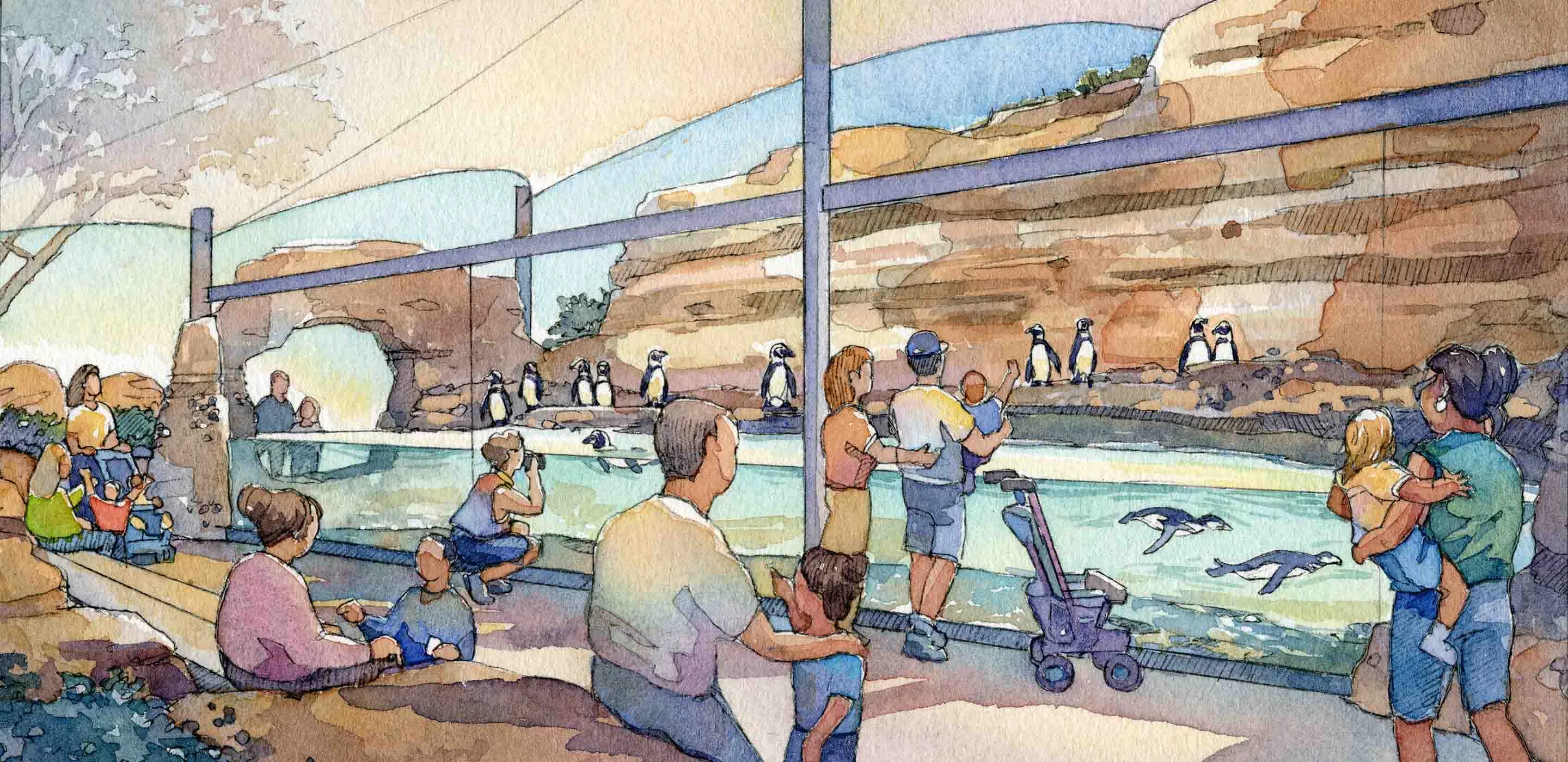
Planet Zoo 2 aquariums need suitable water volume, salinity, temperature, food and staff access for their residents. The confirmed construction sequence includes aquarium barriers, an aquarium staff gate connected to paths and a filter network supplying appropriate water. Cleanliness, window cleaning and barrier maintenance remain important after construction.
This October 12, 2026 pre-release guide explains the confirmed system and a practical setup order. Exact species volumes, temperature ranges, filter capacity limits, equipment prices and maintenance intervals are not verified here. Use the actual species and equipment information for those values rather than treating every tank as a standard-size fishbowl.
Choose residents before the final tank shape
An aquarium is a home for particular animals, not a decorative container that becomes suitable once it contains water. Start by choosing a species and checking its relevant requirements. Keep content access and current adoption conditions separate from the construction plan.
Aquatic animals require appropriate space, expressed as water volume, as well as food and a suitable environment. The volume needed for one species cannot be supplied by another animal's appearance or a real aquarium photograph. This guide does not offer a universal minimum or a per-resident expansion formula.
As a planning recommendation, begin with a simple species-focused aquarium while you learn the system. A complex mixed display introduces additional questions about compatibility and shared conditions. You can reserve the design idea now without claiming that all proposed residents already form a verified combination.
Construct a shell you can inspect
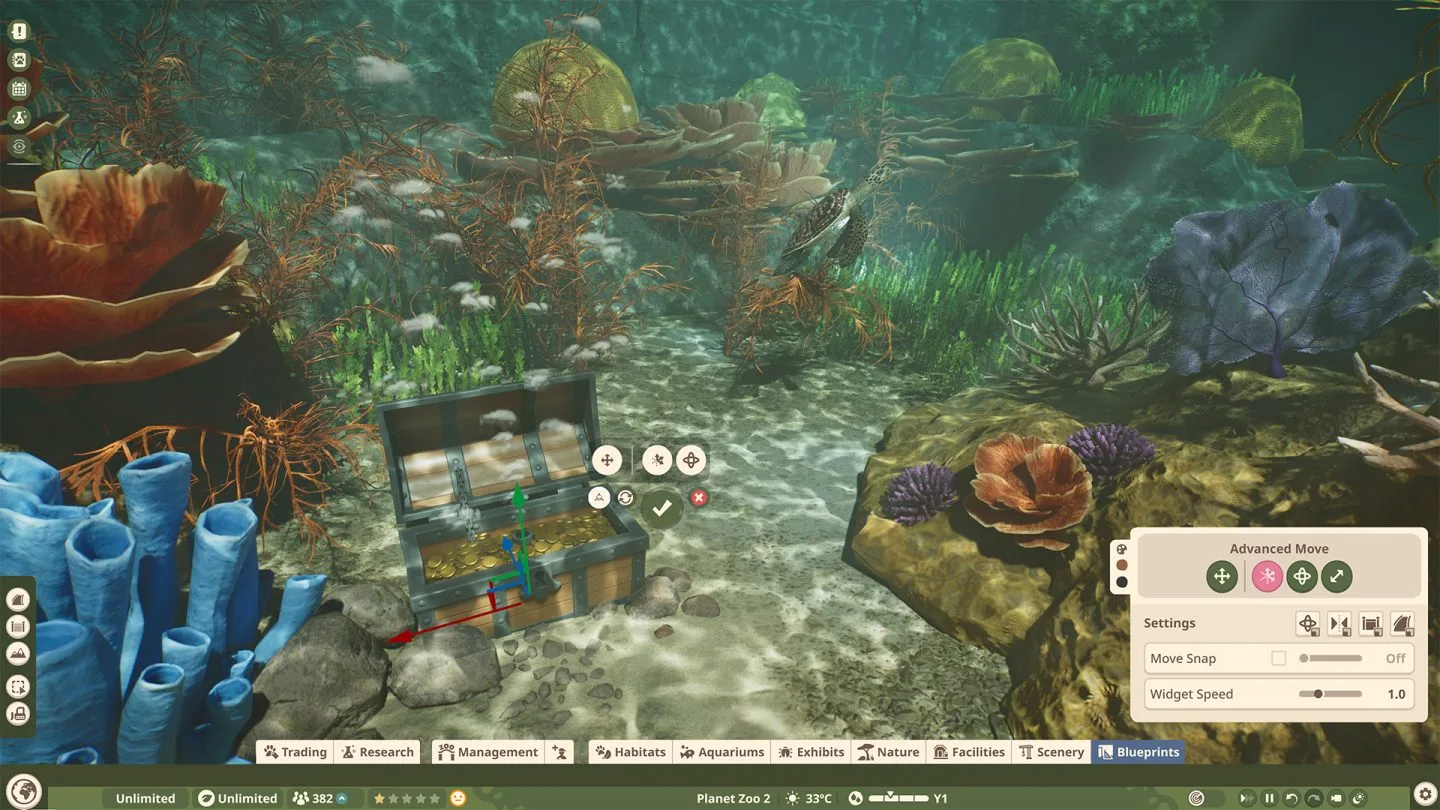
Aquarium building supports customization of barriers, including their size, orientation and height. You can build a tank piece by piece or use ready-to-use aquarium blueprints. The Workshop also provides community creations.
For a first construction pass, prioritize a readable boundary and a sensible entrance location. That arrangement makes later service and environmental decisions easier to understand. It is a planning method, not a claim that the game rewards a particular geometric shape.
A blueprint can save effort, but its visual quality does not establish suitability for your intended animals. Inspect the functional tank and its connections before placing permanent buildings around it. If the shell needs extensive changes to provide a usable staff route or the necessary water space, make those changes before finishing its decorative frontage.
Add a staff gate and path connection
The aquarium staff gate gives staff access to care for animals and maintain the aquarium. It must be connected to the path network. Include this connection in the initial plan rather than treating it as a final detail hidden behind a completed building.
The staff gate also provides controls for water temperature and aquarium lighting. Its role is therefore broader than a visual doorway. Keep it identifiable so that you can revisit the environmental setup without searching through a complicated themed structure.
A guest route is a separate part of the design. Visitors reaching a window or tunnel does not prove that the staff connection is complete. As a practical inspection step, trace the service route independently from the guest frontage. After a major redesign, recheck that route before interpreting a care problem as an issue with the animals themselves.
Supply the correct salinity through filters
Salinity is critical to aquatic animal welfare. The confirmed system distinguishes freshwater, saltwater and brackish conditions. Saltwater animals cannot simply be placed in freshwater and expected to survive.
A network of water filters attaches to aquariums and supplies water. The filters can be configured for the appropriate category. Match that category to the species requirements rather than to a scenic theme or the color of the tank.
No verified filter capacity, service radius or tank-count formula is supplied here. Use the actual equipment information when determining how a network should serve your design. A connected-looking pipe arrangement is not a reason to invent those numbers. The practical checklist is to confirm the intended water type, the supply connection and the applicable equipment conditions before adding animals.
Set temperature independently from water appearance
Temperature is another species-specific consideration. Different aquatic animals have their own preferences, and the aquarium staff gate allows you to control the water temperature. Verify the required range before choosing a final setting.
Water tone is customizable, but its color is not a substitute for a correct environmental configuration. A warm-looking tropical scene can still have an inappropriate temperature setting, and clear blue water alone does not establish suitable salinity.
As a planning method, record salinity and temperature in separate fields. This keeps two different conditions from being reduced to one vague statement that the water 'looks right.' If you intend to combine species, compare their actual requirements rather than assuming that a shared aquarium theme provides a common setting. No verified temperature overlaps or mixed-species pairs are supplied in this guide.
Evaluate volume as three-dimensional space
A tank's overhead footprint describes only part of its shape. Aquarium care uses water volume, so height matters as well as the plan viewed from above. This is especially relevant to tall, multistory or subterranean designs.
For a simple rectangular planning box, multiplying length, width and height describes its geometric volume. That calculation is a concept aid, not a claim that it exactly reproduces Planet Zoo 2's reported usable water volume. An actual aquarium may have an irregular shape or internal structures that require inspection through the game.
Leave the final species comparison to the current game values. Do not claim that a taller decorative building necessarily gives the animals more usable water space. Distinguish the external architecture from the aquarium it contains, and keep a practical option for revising the shell before completing all surrounding structures.
Provide food and supported functional objects
Aquatic animals need access to food. The exact feeding facility and setup depend on the species, and the material available here does not establish a universal feeder or a verified food bill. Use the animal's actual information when choosing functional equipment.
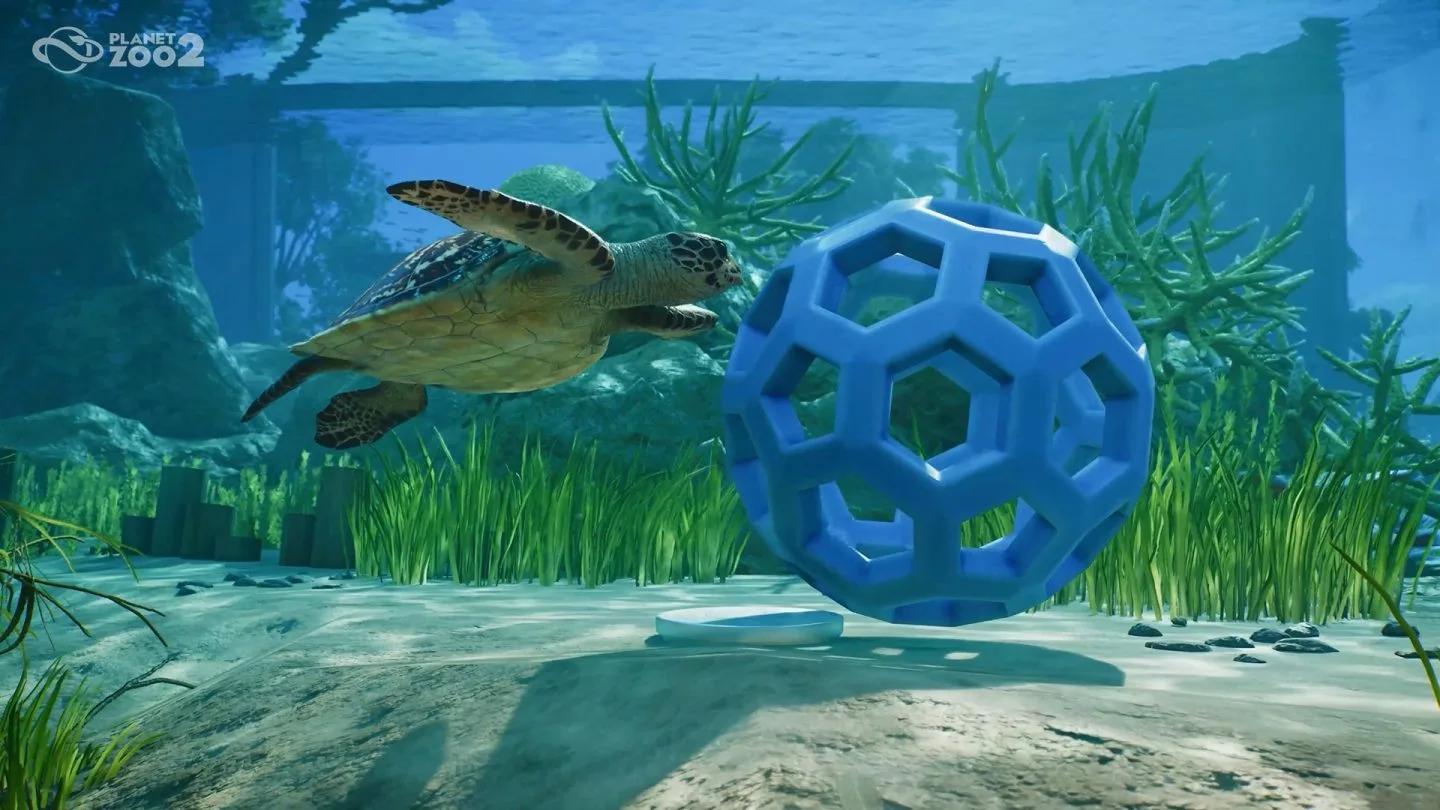
The confirmed aquarium material shows aquatic enrichment, including a hawksbill turtle interacting with an object. That demonstrates the system's role without supplying a complete list of objects for every resident. Do not assume that a food or enrichment object is compatible with all aquatic animals.
As a practical build sequence, place supported functional elements in an arrangement you can inspect before filling the tank with scenery. Decoration can help create a coherent environment, but it should not conceal whether an object is accessible. Keep a clear distinction between a themed prop and something the animal can actually use.
Keep water and windows clean
Aquarium cleanliness affects animal care and the guest experience. Dirty aquariums make it harder to see residents and can increase the likelihood of disease. The water network helps keep the aquarium supplied with clean water.
Staff also need to dive into the aquarium to clean its windows. This is a separate visible maintenance task, not something replaced by choosing an attractive water color. Preserve the staff entrance and its path connection so the service plan remains understandable as the exhibit grows.
Do not invent a fixed cleaning interval or diagnose every poor view as a filter failure. Inspect the actual conditions relevant to the problem. If the concern is visibility, distinguish window condition, water condition and the physical viewing angle. A heavily decorated foreground can obstruct a clear tank without being a water-quality issue.
Maintain barriers against cracks and leaks
Aquarium barriers can develop cracks, and maintenance helps reduce the chance of leaks. Different barrier types provide different levels of protection. The available material does not establish a numerical durability ranking or the correct material for every tank.
Choose construction pieces using their actual information and the requirements of your design. Keep maintenance in the plan after building the shell; a completed exterior does not remove the aquarium's ongoing care needs.
As a practical inspection approach, keep barrier condition separate from animal environment and window visibility. An aquarium may look attractive while one of those areas still needs attention. If you redesign the outline or add a large building around it, consider how you will continue to understand and inspect the tank. Decorative complexity should not make the functional shell impossible to evaluate.
Add guest tunnels after the essential setup
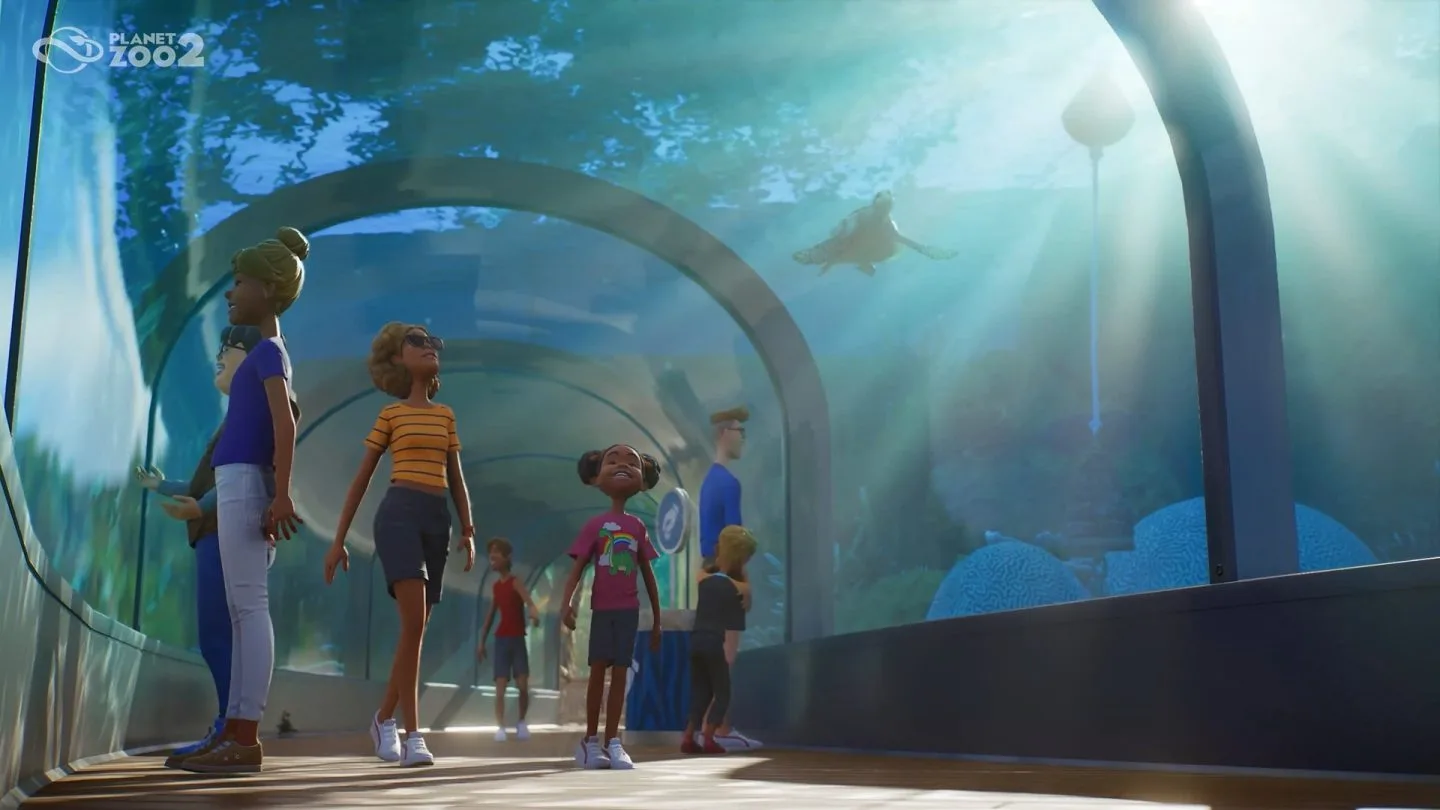
A guest gate allows you to build a tunnel through the aquarium's water, creating an underwater-style viewing experience. Tunnels can be placed at different heights. Barrier options such as one-way glass and concave or convex areas offer other ways to improve the view.
Treat these as presentation tools. They do not establish a species requirement or guarantee a particular increase in happiness or income. A dramatic tunnel cannot compensate for the wrong salinity, an unsuitable temperature or missing staff access.
As a planning recommendation, establish the basic home first, then choose whether a tunnel improves your layout. A side window may provide a simpler initial view while you learn the system. Use the more elaborate viewing idea when you can explain how it fits the tank, the guest route and the service connection.
Inspect vertical and naturalistic designs carefully
Planet Zoo 2 supports multistory and subterranean aquariums. Invisible habitat barriers and scenery can also create naturalistic aquatic spaces. Those options increase creative freedom, but they do not supply a shortcut around the residents' care requirements.
For a complex design, separate the water space, guest circulation, staff route and exterior architecture in your planning notes. Each has a different purpose. A convincing underwater cave scene is not a reliable volume measurement, and a natural-looking edge is not proof that the functional boundary has been evaluated.
Begin with the essential arrangement and preserve its readability as you add detail. That recommendation is especially useful for underground or stacked structures where a single camera angle cannot show every connection. Use the game to verify the finished arrangement instead of trusting the building's silhouette.
Complete the aquarium with a short final check
Before adding the intended residents, confirm the exact species, content access, required water conditions and applicable volume. Check the staff gate and path connection, the filter supply and the supported feeding setup. Keep unresolved compatibility decisions out of the initial tank.
After construction, inspect cleanliness, window care and barrier maintenance separately. Recheck functional access after adding tunnels or exterior buildings. Keep temperature and salinity tied to the animals' actual requirements rather than the exhibit's visual theme.
The unresolved quantities are species minimums, equipment limits, costs and maintenance timing. The confirmed workflow still gives you a useful route to a serviceable aquarium: establish the home and water environment first, then build the viewing experience around them.