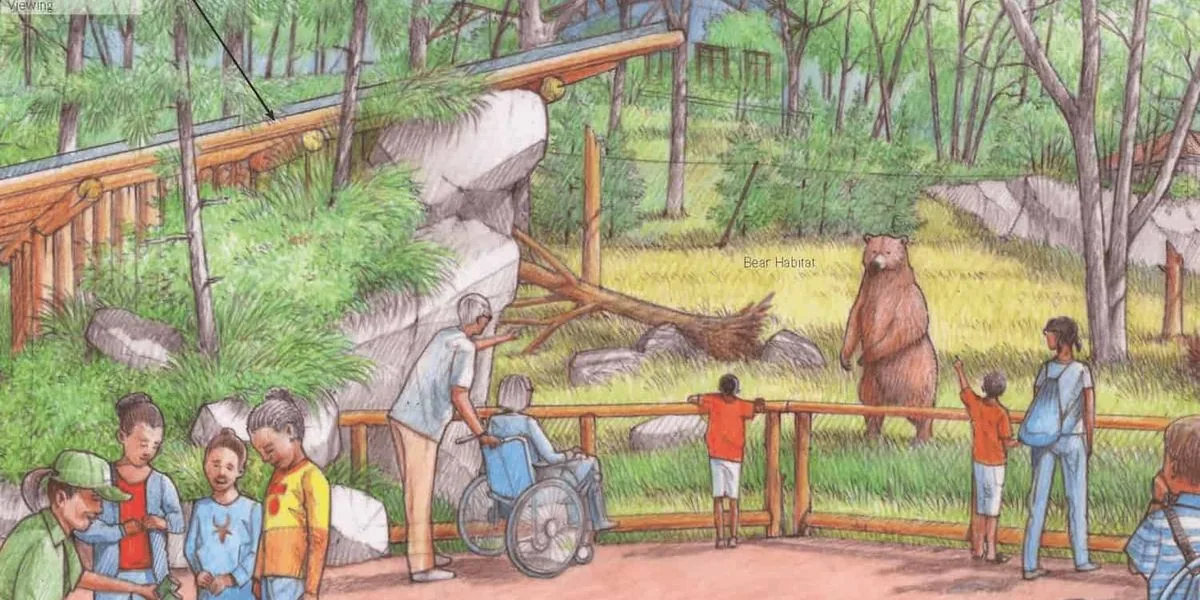
Planet Zoo 2 research upgrades are confirmed to unlock new items, better welfare options and opportunities to release animals into Wildlife Reserves. Vets conduct research in zoos, while reserve research provides insights into natural behaviour and unlocks higher levels of species research. Exact research trees, level names, durations and costs are not verified in this guide, updated on 12 October 2026 before the 13 October launch.
Choose a research goal from the animal you are already caring for and the next outcome you need. Improving an existing habitat, working toward Thriving and preparing a conservation release are different goals. A research choice becomes useful when you can connect its result to a specific change in your zoo or reserve.
The Planet Hub provides a way to manage research across your locations within the current game mode. Use that network view to organise priorities, then verify the actual requirement and result shown in your game before committing to a particular upgrade path.
Start with an outcome rather than a complete research list
A long research queue is not automatically a good plan. Before selecting a topic, identify what you want to improve and what currently prevents it. The useful end state might be an additional welfare option for a species, progress toward Thriving or the ability to release a suitable group into a reserve.
Keep your first goal narrow. Researching for an animal already housed in your zoo gives you a clear place to apply what you learn. Researching for an imagined future section can still be a deliberate choice, but its value depends on when that section will become real.
The following table separates confirmed research outcomes from decisions you need to make yourself.
| Research goal | Confirmed connection | Planning decision |
|---|---|---|
| Improve care | Research unlocks items and welfare options | Which resident needs an improvement you can implement |
| Pursue Thriving | Research is required to understand the species | Whether its current home is ready for the extra work |
| Prepare release | Research opens release opportunities | Which species and destination your project will use |
| Advance species knowledge | Wildlife Reserves unlock higher research levels | How the reserve will support your zoo network |
This is a goal map rather than a research tree. It does not assign an upgrade to a particular numbered level.
Keep urgent animal care separate from research progress
Animals need food, water, adequate space, appropriate terrain and plants, and suitable social and enrichment conditions. Research does not remove your responsibility to provide those basics while a topic is in progress.
If an animal has an obvious care problem, identify whether it can be addressed with the options already available. Do not wait for an unspecified upgrade when the immediate issue is an unfinished habitat or a missing care arrangement.
Vets also treat sick animals. When planning research, consider that the role has a care function as well as a progression function. This guide does not establish a staffing ratio or a rule for how the final game prioritises tasks. The sensible planning principle is to avoid assuming unlimited research capacity while your zoo requires veterinary attention.
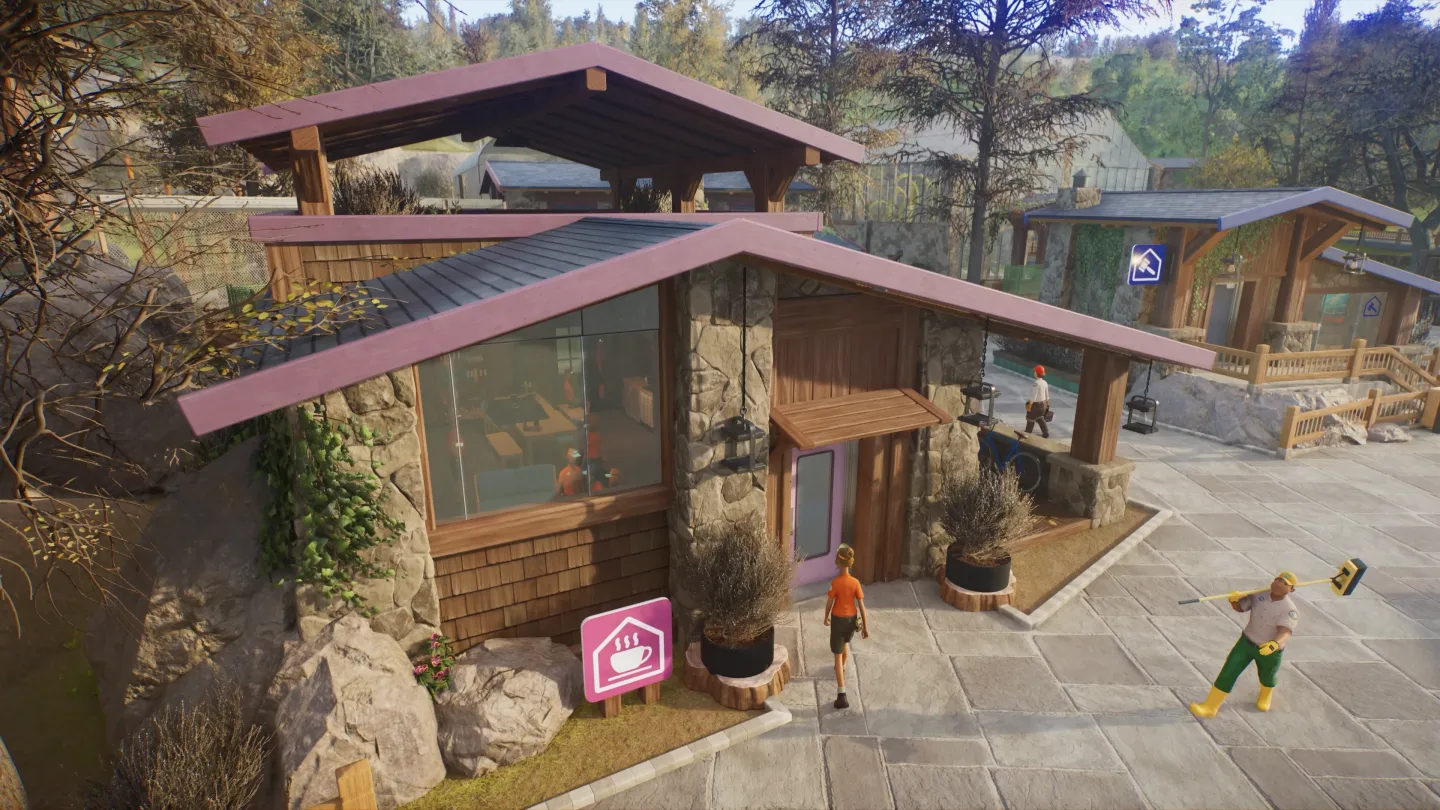
The staff-facility scene illustrates how care and research sit inside a physical zoo. When developing a research plan, include the facilities and staff support around your animals. The image is not a research menu, and it does not establish a building's exact research output.
Use Thriving as a project with several parts
Thriving is a state beyond meeting ordinary welfare needs. It is connected to a more natural and enriching environment, and animals that thrive live longer and encourage guests to donate more. Research comes first because you need a better understanding of the species.
A practical Thriving project therefore has two linked parts: learning what additional care is needed and applying that understanding to the animal's environment. Completing research alone should not be treated as proof that the state has been achieved.
Before pursuing the upgrade, review the habitat's basic condition. If major needs are unresolved, improving them gives the later research result somewhere useful to land. If the habitat is already functioning well, identify what additional work the research makes possible when it becomes available.
Do not invent a universal checklist for every species. Record the actual species-specific conditions shown in your game. The requirements for one resident are not a substitute for those of another animal simply because both are housed in similar-looking habitats.
Connect release research to a real reserve destination
Research can open opportunities to release animals into Wildlife Reserves. A reserve is more than a destination marker: it contains ecosystems you establish, rewild and support through conservation work.
If release is your research goal, decide which species and which ecosystem the project is meant to serve. That gives you a way to judge whether the next research choice contributes to a practical outcome rather than an abstract completion percentage.
The animal group also matters. Release groups vary by species and can include solitary animals, breeding pairs or larger groups. Requirements may involve longevity, fertility and genetic diversity. The exact thresholds are not provided here, so a research plan should retain room for the actual release conditions shown in the game.
Avoid researching toward release while assuming your existing animals must already qualify. Verify their suitability and the destination's readiness as separate parts of the project. Research may be a prerequisite, but it is not the whole release decision.
Understand what a reserve adds to research
Wildlife Reserves provide information about animals behaving in natural environments. They earn Conservation Credits, unlock higher species-research levels and create further opportunities to improve care in your zoos.
This creates a relationship between zoo care and conservation outside the zoo. You care for animals, prepare appropriate release groups and establish ecosystems; reserve research then contributes knowledge back to your network.
That relationship is confirmed, but the guide does not assign a specific credit yield to an animal, a research rate to an ecosystem or a maximum level to a species. Treat those as values to inspect in the game rather than filling a spreadsheet from assumptions.
Plan the reserve around the ecosystem and research goal together. A visually attractive landscape still needs suitable environmental conditions and an appropriate mix of animal roles if it is to support biodiversity. Research equipment is part of that managed environment, rather than a decoration placed wherever it looks best.
Build the confirmed parts of a reserve research network
The core of a reserve Research Network is a Research Outpost with its own Research Vehicle. Other equipment includes Observation Platforms, Acoustic Monitors and Camera Traps, each associated with collecting information about animals.
Observation Platforms allow staff to watch wildlife, Acoustic Monitors gather audio and Camera Traps capture footage. These descriptions help you understand the intended roles without claiming an exact coverage distance, capacity or best placement formula.
When preparing a reserve, mark the areas you want to observe and the kinds of behaviour relevant to your project. Then check the actual equipment requirements and effects before deciding how much to build. A complete-looking network is not proof that every device is serving your intended goal.
Keep infrastructure and ecosystem development connected. Pollution cleanup, invasive-plant removal and the right balance of water, foliage and terrain create the setting the animals need. Monitoring a poorly prepared ecosystem does not substitute for making it suitable.
Use the Planet Hub without losing local context
The Planet Hub manages research, trading and storage across locations within your current game mode. It also lets you move between locations while playing. Franchise additionally includes shared progression and research within its global network.
Use the Hub to see which projects are active and which animals or locations they serve. A simple personal list can pair each research goal with a destination, a reason for priority and the work needed after completion.
Keep mode boundaries visible. This guide does not assume that a research result transfers between Career, Sandbox and Franchise. Nor does it establish the exact sharing rules for every research category beyond the confirmed network descriptions.
When you move to another zoo, verify how the result applies there. A broadly shared progression system can still require local construction and care. The Hub helps organise the network, while the benefit must be implemented where the animal lives.
Prioritise research you can act on
A useful ordering method is to prefer research with a clear near-term application. If a result would let you improve care for current residents, it has an identifiable purpose. If it would support an upcoming release group whose ecosystem is nearly ready, it belongs to a concrete conservation plan.
You can deliberately pursue longer-term projects, but name the dependency. For example, a reserve-related research goal may require ecosystem preparation before it becomes useful. Writing that dependency prevents you from mistaking research progress for completed conservation work.
Avoid a universal best-upgrade ranking. No verified research costs or timings are available here, so this guide cannot calculate the fastest progression route or the highest return per hour. Your current animals, facilities and goals should determine the first investigation.
If two options seem equally relevant, compare the changes they would let you make immediately. Choose the one whose result you can explain and apply, rather than the one with the most impressive description.
Diagnose research that has not delivered the expected result
When an upgrade appears complete but the expected outcome is missing, check your assumption before changing several unrelated systems. You may have completed a different research goal, be looking at another species or still need to apply the new option locally.
Use this diagnostic sequence:
- Confirm the exact species and research topic involved.
- Read the result or unlock information actually shown in the game.
- Check whether you are in the intended mode and location.
- Identify any construction or care change needed to use the result.
- For Thriving, verify the animal's conditions rather than assuming research grants the state.
- For release, verify both the animal group and the ecosystem destination.
- For reserve progress, inspect the Research Network and the biodiversity project together.
These checks do not assert particular menu labels. They help you distinguish a missing prerequisite from a mistaken expectation.
Record outcomes instead of collecting unsupported numbers
As you progress, keep short notes about what a completed topic actually changed. Record the species, mode, location, visible result and the improvement you made afterward. Add costs, durations or thresholds only when the game provides them.
This turns research into a series of observable projects. It also makes later decisions easier: you can see which upgrades solved a care problem and which still depend on reserve or habitat work.
Treat early observations as context-specific until you have reason to generalise them. A research experience in one mode or location is useful evidence for that situation, but it does not establish every species' progression.
The meaningful milestone is the applied result: a newly usable care option, an animal meeting its actual Thriving conditions or a release project with its requirements satisfied. A research completion marker alone does not prove those wider outcomes.